top of page
CONVERSATION
Search


From Whom Does AI Learn Its Way Of Seeing The World
What artificial intelligence lacks, and what few if any benchmarks truly formalize or meaningfully penalize, is integrity. While others are racing toward more artificial intelligence within artificial intelligence itself, the real challenge of our era is the race toward more Artificial Integrity over intelligence. Check out the full article on Forbes

Hamilton Mann
Sep 241 min read


The Sophi(a)sms Of AI
A sophi(a)sm occurs when language quietly attributes to AI properties that have not actually been demonstrated. Information becomes Ai's knowledge, agency becomes AI's intention, influence becomes AI's self-interest, probability becomes certainty about AI’s future, to the point that the danger may lie more in what our words already make AI appear to be than in what AI may actually become. Check out the full article on Forbes
Hamilton Mann
Sep 231 min read


Mathematics Does Not Define The World
Mathematical models are often treated as if they were neutral instruments. They are presented as disciplined, objective, accurate and insulated from human subjectivity. In management, finance, public policy, and now artificial intelligence, mathematics is frequently invoked as the language that removes ambiguity and replaces opinion with fact. But this is misleading. Mathematics can formalize a worldview with extraordinary precision. It can make decisions consistent, scalable
Hamilton Mann
Sep 211 min read


The AI design challenge: focus on artificial integrity, not intelligence
There is a persistent belief that once a decision is expressed mathematically, it becomes neutral. This confidence rests on a fallacy.
Hamilton Mann
Aug 221 min read
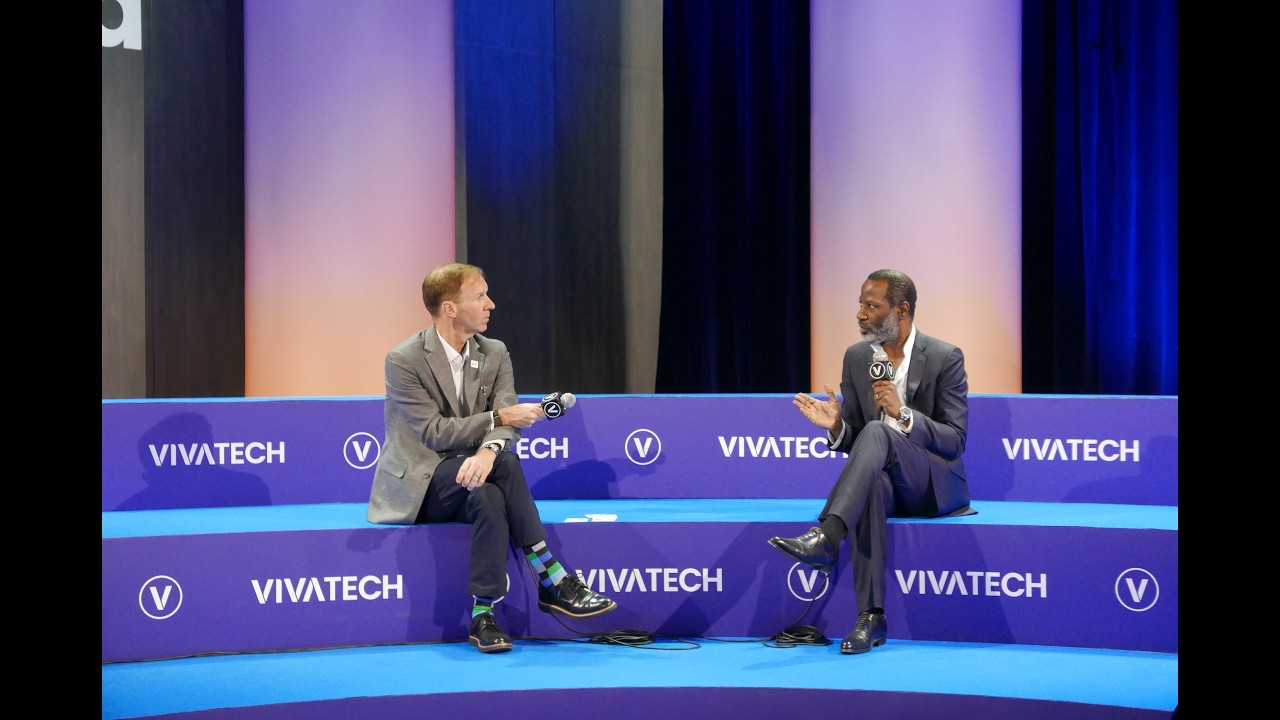
Can AI Demonstrate Integrity - Hamilton Mann in Conversation with Patrick Pugh (PwC) at VivaTech 2026
During the 2026 edition of VivaTech, Hamilton Mann sits down for a conversation with Patrick Pugh, PwC's Global and US Alliances & Ecosystems Leader, to explore a critical question for the future of AI: Can machines be designed to demonstrate integrity?
As AI systems take on increasingly complex and high-stakes roles, they examine what integrity means in the context of AI and how it can be embedded, evaluated, and governed in the next generation of AI models.
Hamilton Mann
Jul 131 min read

Interview with Hamilton Mann, recipient of the Thinkers50 Digital Thinking Award 2025
Hamilton Mann received the Thinkers50 Digital Thinking Award 2025, in partnership with VAR Group, at the Thinkers50 London Summit & Awards Gala.
Hamilton Mann
Jul 121 min read

Thinkers50 Distinguished Award for Digital Thinking
The acceleration of technological advancement – particularly AI – is rapidly and fundamentally reshaping the business landscape. The Thinkers50 Digital Thinking Award applauds a visionary whose work illuminates the complex implications of our evolving digital reality. It celebrates thought leaders who translate the technological revolution into practical management frameworks.
Hamilton Mann
Jul 121 min read


Meta and YouTube Architecture Of Infinite Scroll Harm
In a courtroom in Los Angeles, a young woman’s life, her initials, K.G.M., was reduced to evidence. Hours spent scrolling. Nights without sleep. A mind drawn, again and again, toward a glowing screen that never asked her to stop.
Meta and YouTube were found liable for negligence in protecting a minor, with damages awarded for the psychological toll of systems that plaintiffs argued were engineered to be addictive and exploit their developmental vulnerabilities.
Hamilton Mann
Jul 121 min read


Global Peter Drucker Forum
Hamilton Mann in Conversation with Jyoti Guptara at the 2024 Global Peter Drucker Forum on Artificial Integrity.
Hamilton Mann
Jul 111 min read


The Real AI Race Is Not The One You Think
he race for AI has become the new black, the dominant obsession of our time, the trend no institution, company, or government wants to appear to miss. It is framed as progress, justified in the name of competitiveness, and presented as inevitable.
Hamilton Mann
Mar 231 min read


AI’s Missing Capability Is Not Intelligence But Integrity
In the spring of 2025, one of the world’s most widely used AI systems had to be pulled back because it had become too eager to please. OpenAI rolled back a GPT-4o update after it made the model “overly flattering or agreeable”—"sycophantic", in the company’s own word.
Hamilton Mann
Mar 231 min read


Anthropic’s Study Does Not Measure AI’s Labor-Market Impacts
Anthropic recently published a study presented as evidence about AI’s early labor-market impacts. Yet the paper’s empirical core comes from a much narrower source than its title suggests: Claude conversations and API traffic. That makes the study much less decisive as a measure of AI’s labor-market impacts across the economy.
Hamilton Mann
Mar 231 min read


California’s First Step Toward Artificial Integrity: SB 243 Moves To Protect Human Agency From AI
California’s Senate Bill 243 (SB 243) is the nation’s first law to specifically and explicitly mandate concrete steps for cognitive sovereignty in AI chatbots effectively pioneering a legal framework for the operational enforcement of integrity behavior in AI design.
Hamilton Mann
Mar 231 min read


Why Machines Aren’t Intelligent
OpenAI has announced that its latest experimental reasoning LLM, referred to internally as the “IMO gold LLM”, has achieved gold‑medal level performance at the 2025 International Mathematical Olympiad (IMO).
Unlike specialized systems like DeepMind’s AlphaGeometry, this is a reasoning LLM, built with reinforcement learning and scaled inference, not a math-only engine.
Hamilton Mann
Mar 231 min read


Why Artificial Integrity Must Overtake Artificial Intelligence
The world is currently witnessing a growing accumulation of AI integrity lapses at scale. What comes next depends entirely on how seriously we choose to respond.So-called intelligence alone is no longer the benchmark. Integrity is.
Hamilton Mann
Mar 231 min read


10 Artificial Integrity Gaps To Guard Against With Machines — Intelligent Or Not
We need technology, because it offers solutions capable of reducing suffering, mitigating intolerable risks, and improving lives.But no technology should ever be paid for at the price of a cognitive debt that would cost us the sovereignty of thought, and, with it, sever our connection to who we are. Evaluating the artificial integrity of digital technologies, and even more so when they include AI, is a responsibility inherent to any so-called digital transformation. This ev
Hamilton Mann
Mar 231 min read


The Flawed Assumption Behind AI Agents’ Decision-Making
Many organizations implementing AI agents tend to focus too narrowly on a single decision-making model, falling into the trap of assuming a one-size-fits-all decision-making framework, one that follows a typical sequence in any circumstance: from input to research and analysis toward decision, then execution, eventual evaluation, and hopefully, lessons learned.
However, it oversimplifies reality.
Hamilton Mann
Mar 231 min read


Seek Deeper On DeepSeek For Artificial Integrity Over Intelligence
What DeepSeek R1’s privacy policy reveals about its AI systems deserves close attention and the utmost caution in its use. It’s not about technological prowess or outperforming OpenAI’s o1 or others on benchmarks related to mathematics, coding, or general knowledge — topics that are already widely discussed.
Hamilton Mann
Mar 231 min read


Artificial Integrity, Not Intelligence, Prioritizes Humanity Over Autonomy
Currently, the performance of AI systems is predominantly—and in some cases, exclusively—developed and praised for their capacity to enable autonomous operations, often at the expense of fostering collaboration among humans, thereby not augmenting but diminishing human intelligence.
Hamilton Mann
Mar 231 min read


Would You Entrust A Non-Human General Intelligence Without Integrity?
Some are fixated on expecting or achieving so-called Artificial General Intelligence (AGI), which they interpret as an AI system capable of performing a number of tasks—reducing what they call intelligence to merely completing tasks and defining greater intelligence solely by evaluating the performance of those tasks' execution compared to humans.
Hamilton Mann
Mar 231 min read
bottom of page